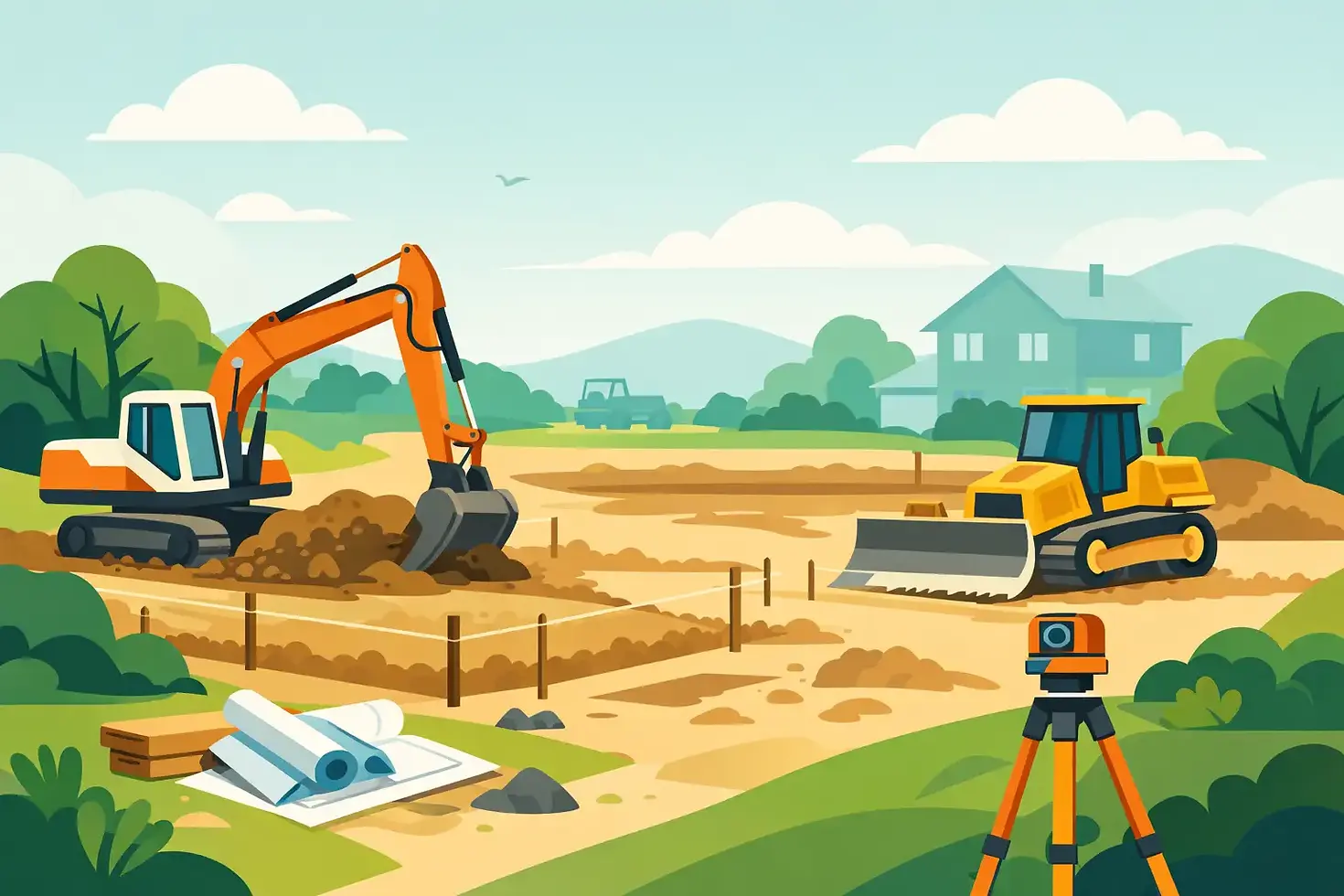
Site Prep for New Home: What Matters Most
- brian6726
- May 19
- 6 min read
A house can be framed in a matter of weeks. A bad homesite can create problems for years. That is why site prep for new home construction deserves more attention than it usually gets. Before concrete, lumber, or utility crews arrive, the lot needs to be cleared, understood, and prepared with discipline. If that part is rushed, every trade that follows pays for it.
For landowners and builders, the goal is not just to make the lot look open. The goal is to create a buildable, accessible, well-draining site without causing unnecessary disturbance or expensive rework. Good preparation protects the schedule, the structure, and the surrounding property.
Site prep for new home work starts before equipment arrives
The first mistake on many lots is treating clearing like the first step. It is not. The first step is understanding exactly what needs to happen on the property and what needs to stay untouched.
That means confirming property lines, identifying the proposed home footprint, locating access points, and thinking through how equipment, concrete trucks, framers, and utility installers will move across the site. It also means looking at slope, drainage patterns, tree density, underbrush, and any obvious obstacles such as stumps, debris piles, soft ground, rock, or old fencing hidden in vegetation.
This is where discipline matters. If an operator starts cutting without a clear plan, it is easy to remove the wrong trees, create unnecessary ground disturbance, or block off the best route for future work. A controlled site prep job begins with evaluation, not guesswork.
Clearing the homesite is only one part of the job
A lot can look cleared and still be unprepared for construction. That is a common source of confusion, especially on overgrown acreage or partially wooded residential lots.
Clearing usually means removing brush, saplings, small trees, vines, and other vegetation that prevent access or interfere with the build area. On some properties, forestry mulching is the right fit because it reduces overgrowth efficiently while keeping disturbance lower than more aggressive methods. On other sites, selective removal and more traditional clearing may be necessary depending on the density, the terrain, and what the builder needs next.
The right approach depends on the project. If the objective is to open up a house pad, driveway corridor, septic area, and utility path while preserving as much of the surrounding property as possible, low-impact and selective work often makes more sense than broad, indiscriminate clearing. If the lot is severely overgrown or access is poor, more intensive preparation may be needed just to make the site usable.
What matters is that the clearing aligns with the build plan. Removing vegetation without considering grading, drainage, and access is how jobs end up being touched twice.
Access should be planned like part of the build
If trucks cannot get in, the schedule slows down fast. That sounds obvious, but access gets overlooked all the time.
The entry point needs to support equipment movement without turning into a rut-filled mess after the first rain. The route to the homesite should be wide enough, stable enough, and free of obstructions that can damage vehicles or delay crews. If there is a long driveway involved, that route may need clearing, grading, and stabilization before the actual house pad is addressed.
This is also where experienced operators help prevent collateral damage. Tight turns, hidden stumps, soft shoulders, and poor routing can lead to torn-up ground, damaged trees that were supposed to stay, or equipment getting where it should never have been in the first place.
Drainage and grading are where expensive mistakes begin
A build site should never be evaluated only by what is growing on it. Water tells you more than the brush does.
Every lot has drainage patterns, even if they are not obvious in dry weather. Water may sheet across a slope, collect in low spots, move toward the future house pad, or wash out the proposed driveway route. If site prep ignores that, clearing can make the problem worse by exposing soil and changing how water moves.
Proper grading is not just about creating a flat area. It is about shaping the site to support construction, promote drainage, and reduce erosion. The house pad, driveway, swales, and surrounding contours all need to work together. On some lots, that is straightforward. On others, especially sloped or uneven ground, it takes more planning and tighter execution.
There is also a timing issue. If a site is cleared too early and then sits exposed through heavy weather, you can lose ground conditions before construction even starts. Soil can soften, wash, or become harder to manage. In that case, the builder may end up paying to fix a problem that did not need to exist.
What site prep for new home projects should include
The exact scope will vary, but most successful jobs cover the same fundamentals. The build area needs to be clearly opened. Access needs to be established. Vegetation needs to be managed with the next phase in mind. Drainage and grading need to be considered early, not after a problem appears.
In practical terms, that often includes selective land clearing, underbrush removal, mulching or debris handling, opening utility corridors, preparing driveway access, and creating workable conditions around the future house location. Depending on the lot, it may also involve preserving specific tree lines, protecting adjacent areas from unnecessary disturbance, and coordinating the prep work around septic, survey, or foundation plans.
A good operator does not just ask, “What do you want cleared?” He asks where the structure will sit, how the site will be entered, what needs to remain, and what comes next after the clearing is complete.
Boundaries and preservation matter
Not every tree needs to go, and not every open-looking area should be touched.
Many property owners want privacy buffers, shade trees, or natural screening preserved around the homesite. Builders may also need certain setbacks respected or designated areas left alone for erosion control, neighboring property separation, or later phases of work. This is where precision separates professional site prep from rough clearing.
Once the wrong area is disturbed, there is no easy fix. A tree line takes years to replace. A boundary mistake can become a dispute. A churned-up section outside the work zone adds cost without adding value. Controlled execution protects the lot and keeps the project focused.
Cheap site prep often gets paid for twice
Low pricing can be attractive on paper, especially before a build begins and the budget already feels stretched. But site prep is one of those stages where poor execution tends to create downstream costs.
If stumps are left where they interfere with grading, someone has to come back. If access is too narrow for suppliers, adjustments cost time. If brush is pushed where utilities need to run, the site gets reworked. If drainage is ignored, mud and washout show up at the worst possible time. None of that feels cheap once the build is underway.
Reliable site prep is really a risk-control decision. You are paying for planning, communication, equipment capability, and the discipline to complete the work correctly the first time. For many landowners and contractors, that matters more than saving a little money up front and inheriting a bigger problem later.
How to evaluate a site prep contractor
Start with how they communicate. A dependable operator should be able to walk the site, ask direct questions, explain the likely work sequence, and talk clearly about what can and cannot be done. Vague answers early usually turn into vague execution later.
Look for someone who respects property lines, thinks about access and drainage, and does not approach every lot with the same one-size-fits-all method. Equipment matters too, but equipment alone does not guarantee a good result. The operator behind it matters more.
This is also a good time to ask how the site will be protected from unnecessary disturbance and what the finished condition will look like when the prep phase is complete. A professional answer should reflect planning, not improvisation.
For property owners and contractors in Forsyth County and nearby areas, that is the standard Dexter Land Clearing LLC is built around - direct communication, controlled execution, and work handled with accountability from start to finish.
The best site prep does not draw attention to itself later. It simply allows the rest of the project to move forward without avoidable delays, damage, or frustration. If you are preparing to build, that is the kind of groundwork worth getting right.


Comments