
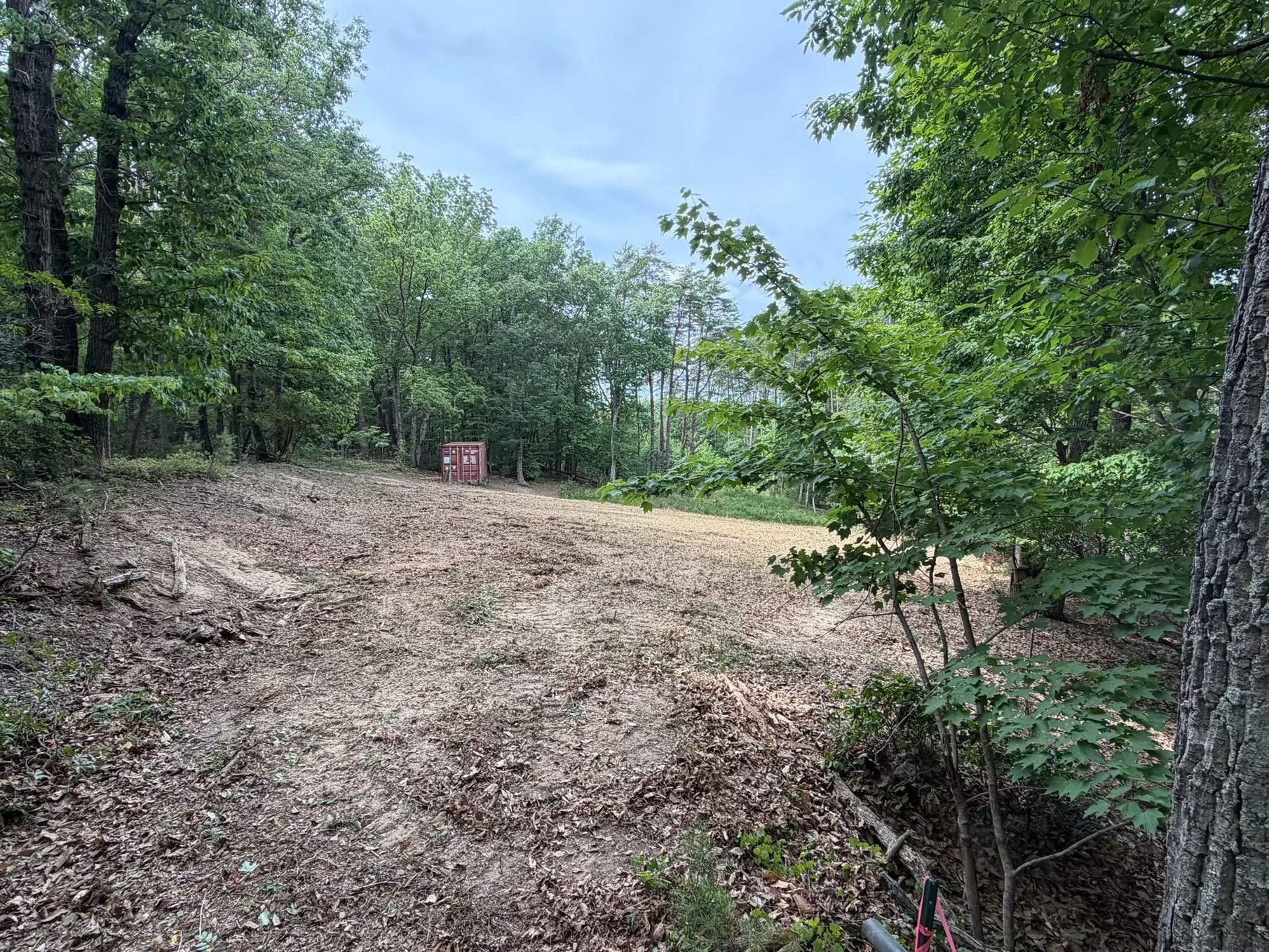
Surfaces Built to Direct Water Correctly
Grading in Pfafftown and surrounding areas for properties with standing water, uneven construction sites, or drainage toward structures
Grading changes how water moves across your property by adjusting the slope and surface elevation. Dexter Land Clearing LLC provides grading services in Pfafftown, Winston-Salem, Clemmons, and neighboring communities for residential, agricultural, and commercial sites where improper slope causes pooling, erosion, or foundation concerns. The work involves cutting down high spots, filling low areas, and shaping the terrain to establish controlled water runoff away from buildings, driveways, and other structures.
This service addresses uneven terrain that prevents effective drainage, creates unstable building pads, or complicates landscaping installation. Precision equipment moves soil to achieve the slope specifications required for your project, whether you're preparing a driveway base, creating a level construction pad, or correcting existing drainage problems. The process also reduces erosion by eliminating areas where water concentrates and carves channels into exposed soil.
Schedule a grading consultation to review site conditions and slope requirements for your property.
How Proper Grading Prevents Long-Term Drainage Problems
Grading work begins with evaluating existing elevations and identifying where water currently flows or collects. The equipment operator adjusts the surface to create consistent slopes that move water toward drainage points, swales, or retention areas. Each pass of the grading blade removes irregularities and establishes the grade needed to prevent water from reversing direction or stalling in low pockets.
After grading is complete, you'll notice water no longer pools near structures, driveways sit on stable bases without dips or humps, and soil stays in place rather than washing into unintended areas. The surface becomes predictable—rain moves where the slope directs it, and construction or landscaping proceeds on terrain that meets engineering or design specifications. These changes reduce the likelihood of foundation moisture intrusion, driveway cracking from unstable subgrades, and soil loss during heavy rainfall.
Grading also involves compacting fill material in layers when raising elevations, which prevents future settling. The finished surface should match the intended use—smooth and level for building pads, gently sloped for lawns, or steeply graded for drainage channels. Site-specific conditions determine the approach, including soil type, existing vegetation, and proximity to property boundaries or utilities.
What Owners Need to Know Before Grading
Property owners in Pfafftown and surrounding areas often ask about grading before starting construction, landscaping, or drainage improvement projects. The following questions address common concerns about the process and what it involves.
Dexter Land Clearing LLC uses experienced operators and precision equipment to match grade specifications for driveways, building sites, and drainage improvement projects. Request an on-site evaluation to determine the grading approach for your property's terrain and water flow patterns.
What preparation is required before grading begins?
The site needs to be cleared of vegetation, debris, and obstacles that interfere with equipment movement. Utility locations should be marked, and any structures or features you want to preserve should be identified so grading work avoids those areas.
How does grading improve drainage around existing buildings?
Adjusting the slope directs water away from foundations and toward drainage paths. In Pfafftown's clay-heavy soils, proper grading prevents water from saturating the ground near structures, which reduces hydrostatic pressure against foundation walls and minimizes moisture intrusion.
What determines the slope angle for graded surfaces?
The intended use and local drainage requirements dictate slope. Building pads typically need minimal slope for stability, while areas designed to move water require steeper grades. The operator calculates the rise-over-run ratio to meet project specifications without creating slopes too steep for the planned use.
How long does grading take for a typical residential lot?
Duration depends on site size, soil conditions, and the amount of elevation change required. A driveway base or small building pad may take a day, while larger parcels with significant cut-and-fill work require more time.
What happens to soil removed during grading?
Excess soil can be spread elsewhere on the property, used to fill low areas, or hauled off-site. The approach depends on how much material is displaced and whether you have a use for it within your property boundaries.
