
Hazardous or Unwanted Trees Removed Safely
Tree Removal in Pfafftown and surrounding areas for damaged trees near structures, storm-weakened limbs, and clearing land for construction or pasture expansion
Trees growing too close to buildings, leaning after storm damage, or occupying land needed for development create safety hazards and limit property use. Dexter Land Clearing LLC removes unwanted, damaged, or hazardous trees from residential, commercial, and rural properties in Pfafftown, Clemmons, Lewisville, and neighboring communities. The service addresses individual problem trees as standalone projects or handles multiple removals as part of larger land clearing operations, using equipment that safely fells trees and processes debris with minimal disruption to surrounding features.
Tree removal involves assessing the tree's condition, planning a safe felling direction, cutting the trunk at the base or in sections if space is limited, and processing the material into manageable pieces for hauling or chipping. Trees with decay, split trunks, or root damage pose collapse risks during storms or high winds, while healthy trees may simply occupy space required for driveways, building pads, or open pasture. Removing them eliminates the hazard or clears the path for construction, landscaping, or agricultural use.
Contact the company for a tree removal estimate based on tree size, location, and site access conditions.
What Changes After Tree Removal Is Finished
The removal process begins with evaluating the tree's lean, nearby obstacles, and the safest direction for the fall. The operator makes strategic cuts to control the felling direction, then processes the trunk and limbs into sections for removal. Stumps can be ground below grade or left flush with the ground, depending on the property's future use—construction sites typically require stump grinding, while pastures may only need the stump cut low enough to avoid interfering with mowing equipment.
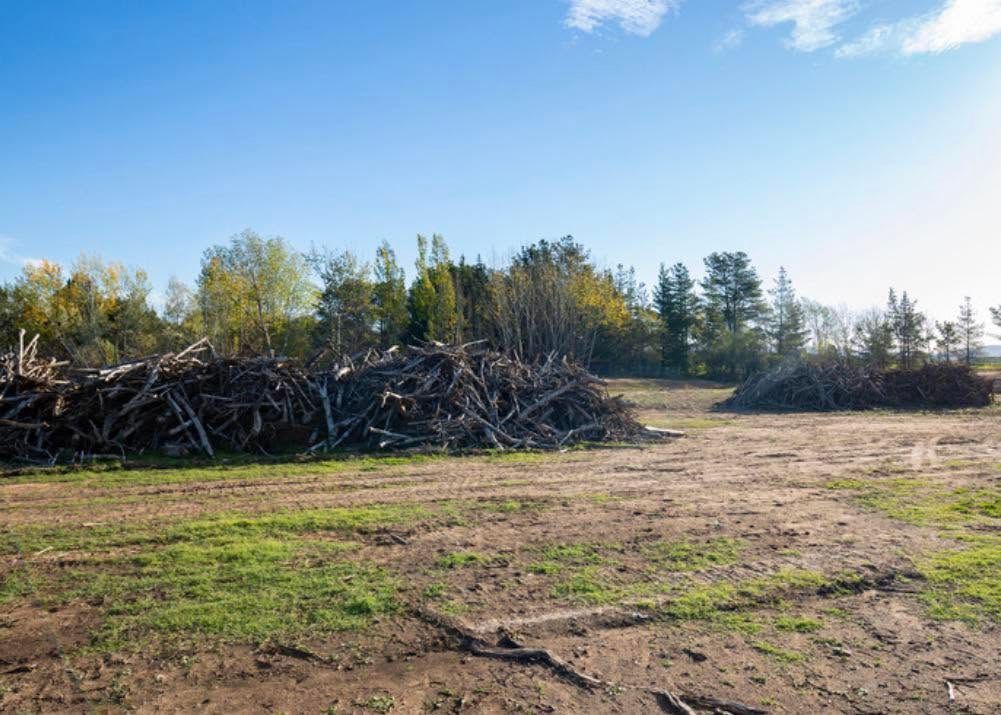
Once the tree is removed, you'll notice clear space where the canopy previously blocked sunlight, eliminated risk from overhanging limbs near roofs or power lines, and open ground ready for construction or other uses. Removing trees improves sightlines, reduces leaf litter and storm debris, and prevents root systems from interfering with foundations, septic systems, or underground utilities. The work also stops further property damage from trees that are already compromised—cracked trunks don't suddenly fail during the next windstorm, and leaning trees no longer threaten structures or vehicles.
Tree removal projects vary in complexity based on proximity to structures, available space for felling, and tree condition. Trees surrounded by buildings or power lines require sectional dismantling rather than a single felling cut, which increases labor and time. Dead or decayed trees are unpredictable during cutting because internal rot weakens structural integrity, requiring extra caution during the operation.
Questions Before Starting Your Project
Clients planning tree removal often have questions about timing, cleanup, and what the service includes.
Dexter Land Clearing LLC uses experienced equipment operators and efficient cleanup methods to remove trees while minimizing disruption to surrounding property. Call (336) 247-6632 to request an estimate based on tree size, location, and access conditions specific to your site.
What factors determine whether a tree should be removed?
Visible hazards like large dead limbs, trunk cracks, severe lean toward structures, or root damage from construction indicate removal may be necessary. Trees that simply occupy needed space for development or improvements are removed based on project requirements rather than safety concerns.
How is debris handled after the tree is cut down?
Limbs and trunks are typically cut into sections and either hauled off-site, chipped into mulch, or left in manageable pieces for the property owner's use as firewood. The approach depends on your preference and whether you want debris removed entirely or processed for reuse.
Why does tree removal near buildings cost more than open-area removal?
Trees close to structures require controlled sectional cuts and careful rigging to prevent limbs from striking roofs, windows, or siding during the process. This adds labor and time compared to felling a tree in an open field where it can drop freely in any safe direction.
When is the best time to remove trees?
Trees can be removed year-round, but winter months when trees are dormant and leaves are absent improve visibility and reduce weight on limbs. In Pfafftown, scheduling removal during drier months also reduces soil compaction from heavy equipment crossing the property.
What happens to the stump after the tree is removed?
Stumps can be ground below the soil surface to allow planting or construction, or cut flush with the ground if they won't interfere with the property's intended use. Grinding adds to the project cost but eliminates the stump entirely, while leaving it in place saves expense if future use permits.
