Access Restored Along Property Corridors
Right-of-Way Clearing in Pfafftown and surrounding areas for utility corridors, fence lines, roads, easements, and restricted-access zones requiring vegetation management
Vegetation encroaching on utility corridors, fence lines, and access roads creates maintenance problems and reduces visibility for equipment operators and drivers. Right-of-way clearing removes brush, saplings, and overhanging limbs from designated corridors to maintain accessibility and meet regulatory or contractual requirements. Dexter Land Clearing LLC clears rights-of-way in Pfafftown, Mount Airy, Winston-Salem, and neighboring communities for residential property owners, utility companies, and commercial landholders who need to maintain clear zones along boundaries, easements, or infrastructure pathways.
The work involves cutting vegetation within specified widths on either side of the corridor centerline, removing material that obstructs access or interferes with utility lines, and disposing of debris according to project requirements. Clearing also improves safety by eliminating blind spots along roads, reducing fire fuel loads near power lines, and allowing inspection access to pipelines, cables, and other infrastructure. The scope depends on the corridor's purpose—utility easements often require wider clearance than private fence lines, and some projects mandate stump removal while others allow vegetation to be cut at ground level.
Request a property evaluation to determine the clearing width and method appropriate for your right-of-way specifications.
What Proper Right-of-Way Clearing Requires
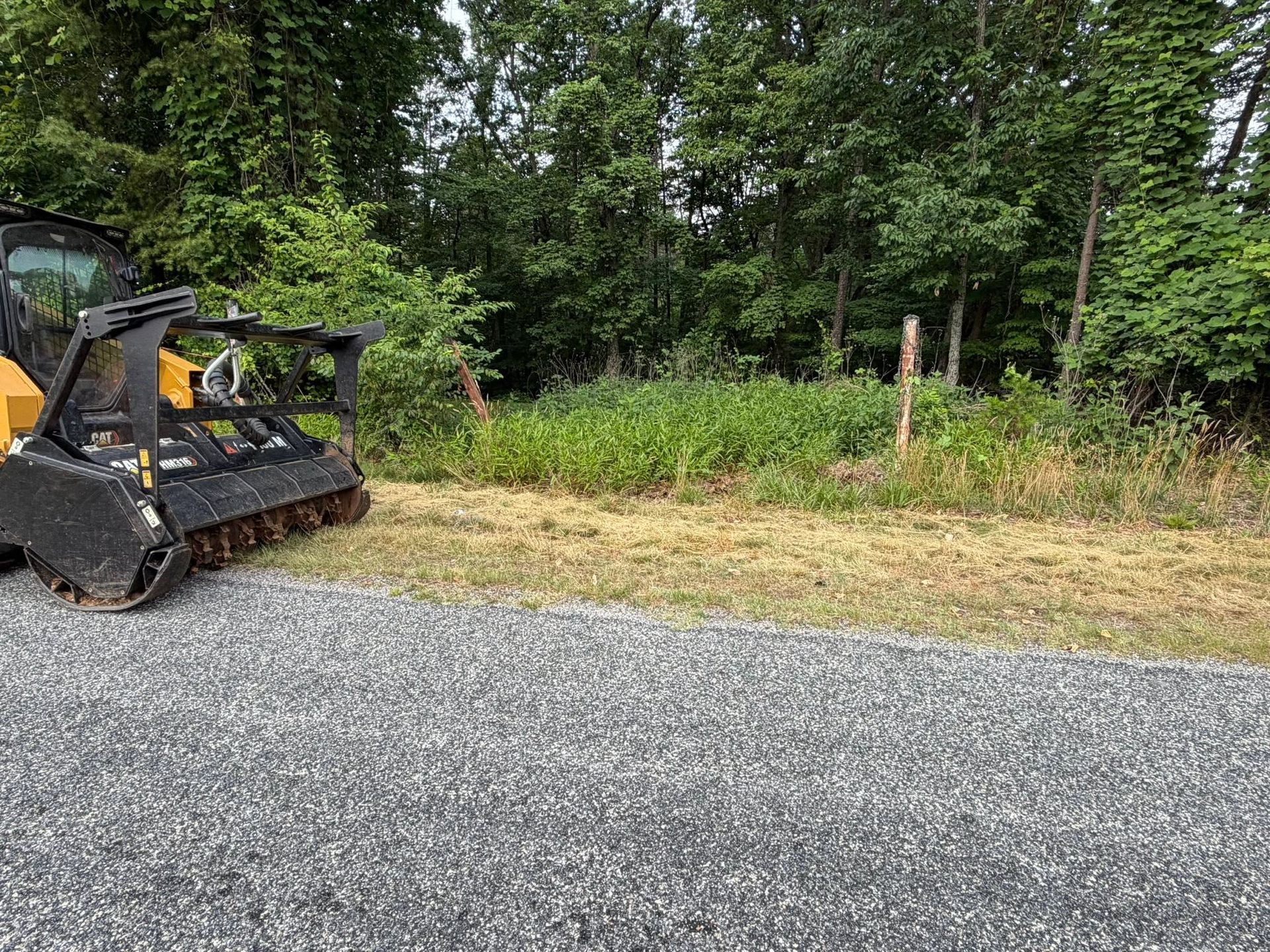
Right-of-way clearing begins by identifying the corridor boundaries using property surveys, easement documents, or utility company specifications. The clearing crew removes vegetation within those boundaries using equipment matched to the terrain and density—forestry mulchers for dense brush, excavators for stump removal, or manual cutting for selective thinning near sensitive areas. Debris is either mulched in place, chipped and hauled, or piled for removal, depending on the project's cleanup requirements and site access.
After clearing is complete, the corridor becomes visibly open from end to end, allowing vehicles or equipment to pass without obstruction. Fence lines become accessible for repairs and livestock monitoring, utility crews can reach infrastructure without cutting their way through vegetation, and road shoulders provide clear sightlines for turning or merging. Regular maintenance becomes simpler because the initial clearing removes established root systems and reduces the density of regrowth.
Right-of-way projects often include selective clearing rather than total vegetation removal. Trees outside the minimum clearance zone may be left standing if they don't interfere with the corridor's function, and ground cover may remain if it doesn't impede access. The specifications depend on the corridor's purpose, the property owner's preferences, and any regulatory requirements governing vegetation management near utilities or public roads.
Common Questions About This Service
Property owners and contractors often ask about right-of-way clearing before starting corridor maintenance or infrastructure projects.
Dexter Land Clearing LLC handles right-of-way projects across varied terrain using dependable equipment capable of working in challenging conditions. Schedule a site visit to review corridor boundaries and clearing specifications for your easement or access route.
What defines the clearing width for a right-of-way?
The width is determined by easement documents, utility company standards, or property owner specifications. Utility corridors may require twenty to fifty feet of clearance, while private fence lines might need only enough width for vehicle access and visibility.
How is right-of-way clearing different from general land clearing?
Right-of-way work targets a linear corridor rather than an entire parcel. The clearing follows specific boundaries and often leaves vegetation intact outside the designated zone, whereas general land clearing typically removes all growth from a larger area.
Why do utility companies require ongoing right-of-way maintenance?
Vegetation regrowth can interfere with power lines, obstruct access for repairs, and increase fire risk. Regular clearing keeps corridors open for inspection and emergency access while reducing the likelihood of outages caused by falling limbs or root intrusion into underground infrastructure.
What equipment handles steep or uneven terrain along rights-of-way?
Tracked forestry mulchers and excavators navigate slopes and rough ground more effectively than wheeled equipment. In Pfafftown's hilly areas, tracked machines maintain stability on grades where traditional mowers or brush hogs would struggle or risk tipping.
How often does a right-of-way need re-clearing?
Regrowth rates depend on climate, soil fertility, and the types of vegetation removed. Most corridors require maintenance every two to five years to prevent brush from re-establishing and obstructing access or infrastructure.
